
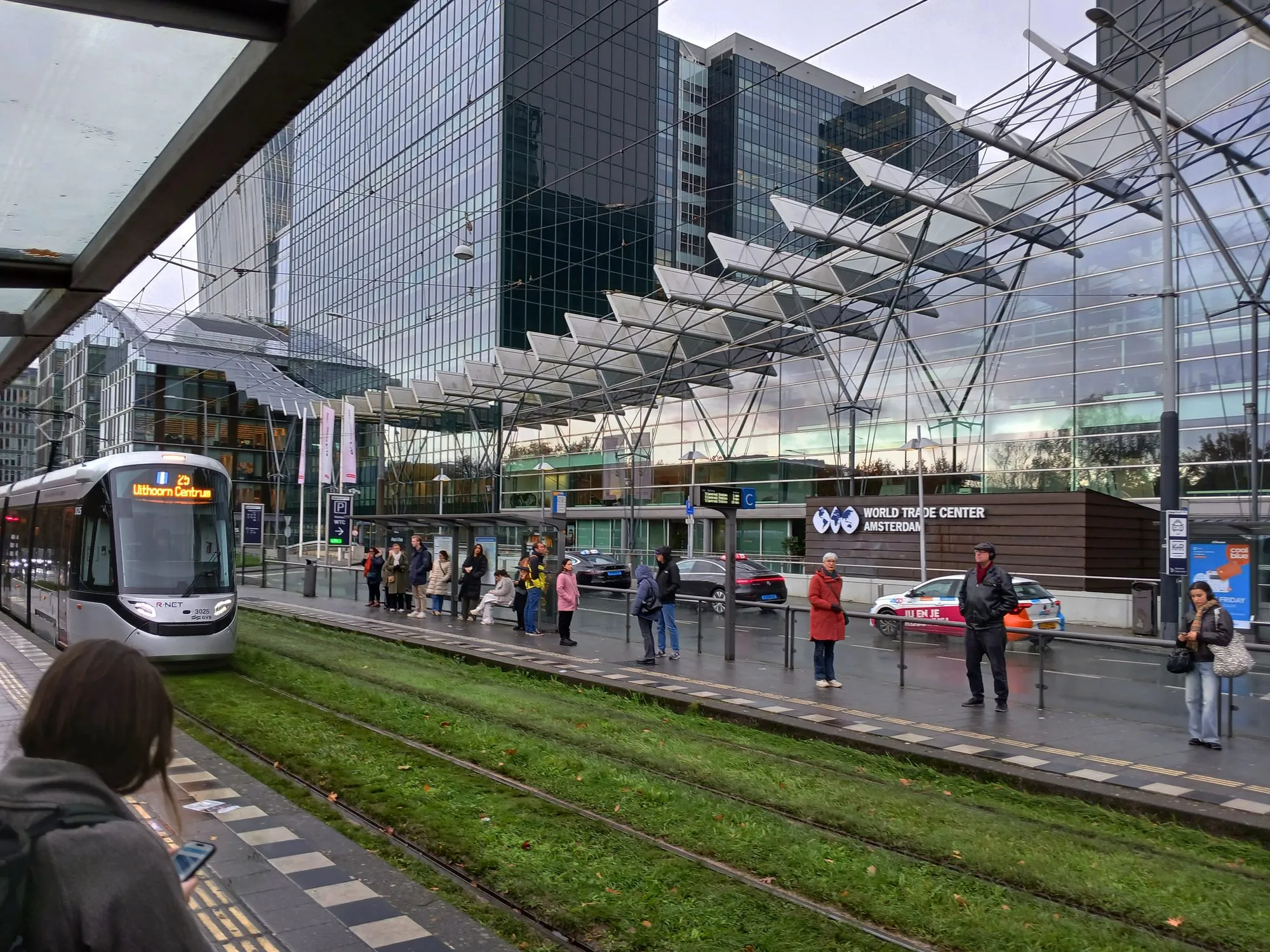
I fit out offices for a living, in Cluj, and I have spent three years listening to two versions of the same market.
One version comes from headlines: Europe is full of empty offices, hybrid work has hollowed out the centre, the tower is finished. The other comes from anyone trying to sign a lease in a good building near a tram stop, who will tell you there is nothing available and the rent went up again.
Both are true, and the numbers say why.
Two numbers, not one
European office vacancy stood at around 9.4% in the first quarter of 2026 — high by the standards of the last decade, and the number that carries the headlines. But vacancy in central business districts averages closer to 4.9%, and genuinely prime central space is estimated at around 2%.
Two per cent is not a glut. Two per cent is a shortage, and it behaves like one: constrained prime supply is pushing headline rents up even while the aggregate vacancy figure looks slack.
The empty space is real. It is just somewhere else — and it is usually older, further out, harder to reach without a car, and harder to make comfortable.
What that means for a city centre
Occupiers are not choosing between an office and no office. They are choosing between a building people will travel to and one they will not, and the deciding factors are unglamorous: how long the commute is, whether there is somewhere to eat, whether the building is pleasant to sit in for eight hours.
That is a planning fact as much as a property one. A city that has made its centre easy to reach and pleasant to be in has a scarce asset. A city that has not is holding a lot of square metres nobody wants.
The interesting part is the second-hand stock
The consensus across the 2026 outlooks is that vacancy comes down partly through conversion rather than absorption — older, weaker buildings leaving the office market altogether and re-entering as housing, hotels or public use.
That is the piece worth watching from a city’s point of view, because it lands exactly where the pressure is. Most vacant space sits in and around central districts, which is precisely where housing demand is highest and new supply is hardest to build. A building that fails as an office can succeed as a hundred flats on a street that already has a tram, a school and a sewer.
It is not automatic. Floor plates fight you, daylight fights you, and the economics only work on some buildings. But it is the rare case where the market’s problem and the city’s problem have the same solution — and it happens at the scale of one building at a time, which is a scale a city can actually work at.