
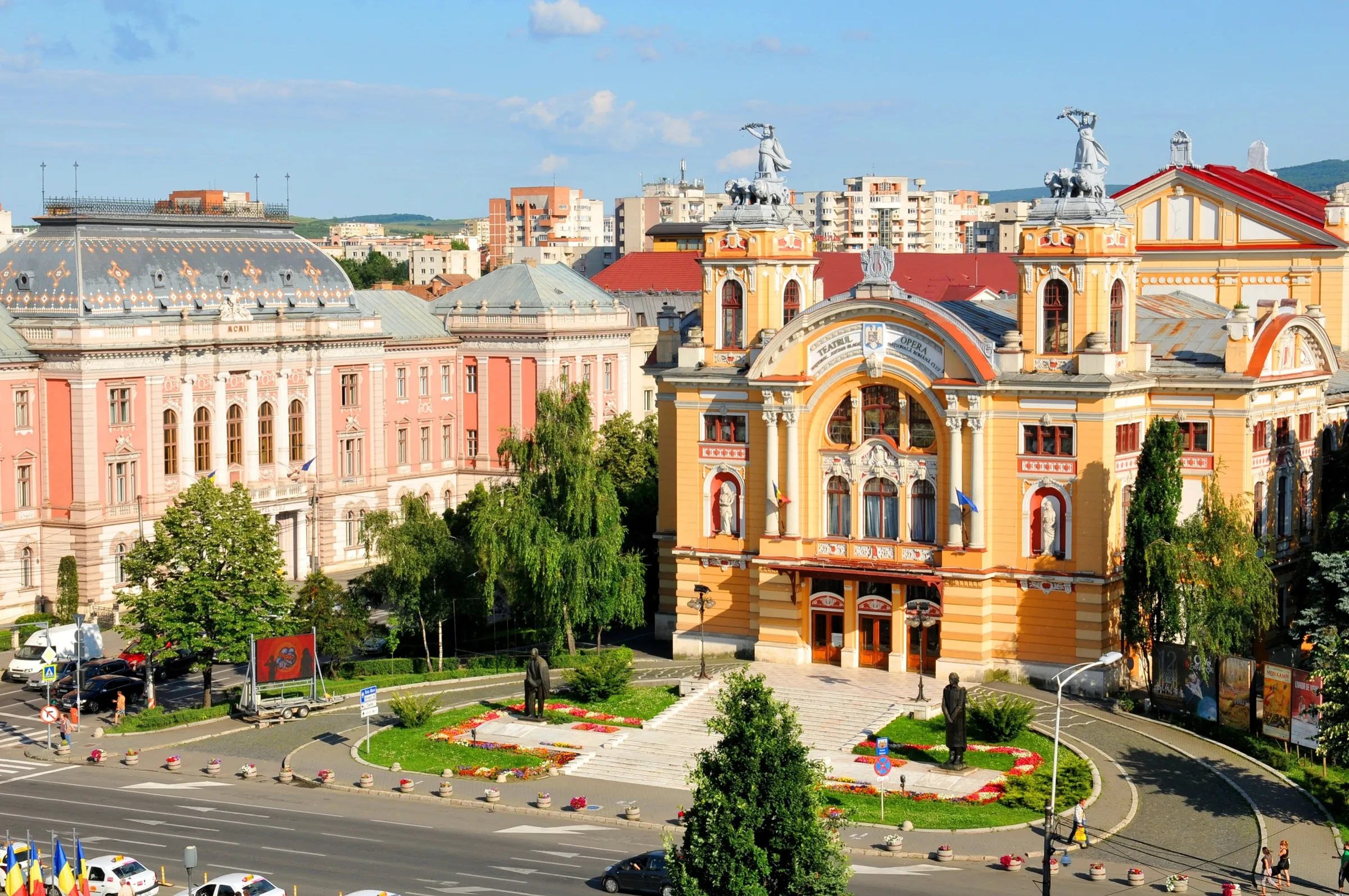
BestCluj.com is the association’s other publication — the local half of the same idea as this site. Where FutureHubs.eu reports European cities, BestCluj covers the galleries, theatres, museums, studios and artists of one city, the one that produced the painters the world now files under the Cluj School.
In April its database was wiped.
What was left
The site ran on WordPress. When we went in, the posts table held one
hello-world post, one sample page, an empty site name and a single author
account nobody recognised. Somebody had been in the file system too — the usual
leftovers at the document root, dated to mid-May. Backups on the host only
reached the end of August, months after the fact. Every one of them was a faithful
copy of a site with nothing in it.
That is the part worth sitting with. The backups worked. They just backed up the loss.
What the Internet Archive had, and what it did not
The Wayback Machine had captured the homepage — twice, in June 2024 and March 2025, identical. That was the whole rescue.
/about-us/, /call-to-creatives/, /call-for-sponsors/ and /news/ had all
been live; the server’s own access logs prove people were reading them. They have
zero snapshots. Nobody, including us, had ever pointed a crawler at them, and
that copy is simply gone. It was rewritten from scratch.
The pictures survived by accident. A snapshot of the whole site directory, pushed to a private repository more than a year earlier for an unrelated reason, turned out to be the only surviving copy of the artwork: 22 illustrations and 16 photographs of Cluj-Napoca — the cathedral, the Telephone Palace — 40 MB of PNG that came back as 6 MB of WebP.
One detail that says everything about checking your own site
The archived footer displayed a Romanian phone number. The tel: link behind it
pointed at a Spanish number that does not connect.
Anyone reading the page saw the right number. Anyone tapping it on a phone — which is most people — got nothing. We have no idea how long that had been true, because nobody had ever clicked their own footer.
What is there now
The site was rebuilt as a static bilingual site and went live on 5 September 2026. It currently publishes 232 pages: 116 in English and 116 in Romanian, an exact mirror rather than an English site with a Romanian afterthought.
Inside that: 59 places, 18 artists, 13 journal pieces, four anchor institutions and four craft entries. There is no database to wipe, because there is no database — every page is a file in version control, and the whole thing can be rebuilt from that repository onto any host in a few minutes.
The thing I would tell anyone running a cultural site
Your work is not archived because it is online. It is archived because somebody made a copy, and the somebody is usually you.
The Internet Archive is remarkable and it is not a backup service — it captures what it happens to reach, and it reached one page of ours. If a page matters, submit it to the Wayback Machine yourself, today, and keep the text somewhere that is not the server it is served from.
We lost four pages of writing about artists in Cluj. Nobody attacked them specifically; they were collateral. They are gone in a way that money cannot undo, and the reason is that the only copy lived in one database on one machine.