
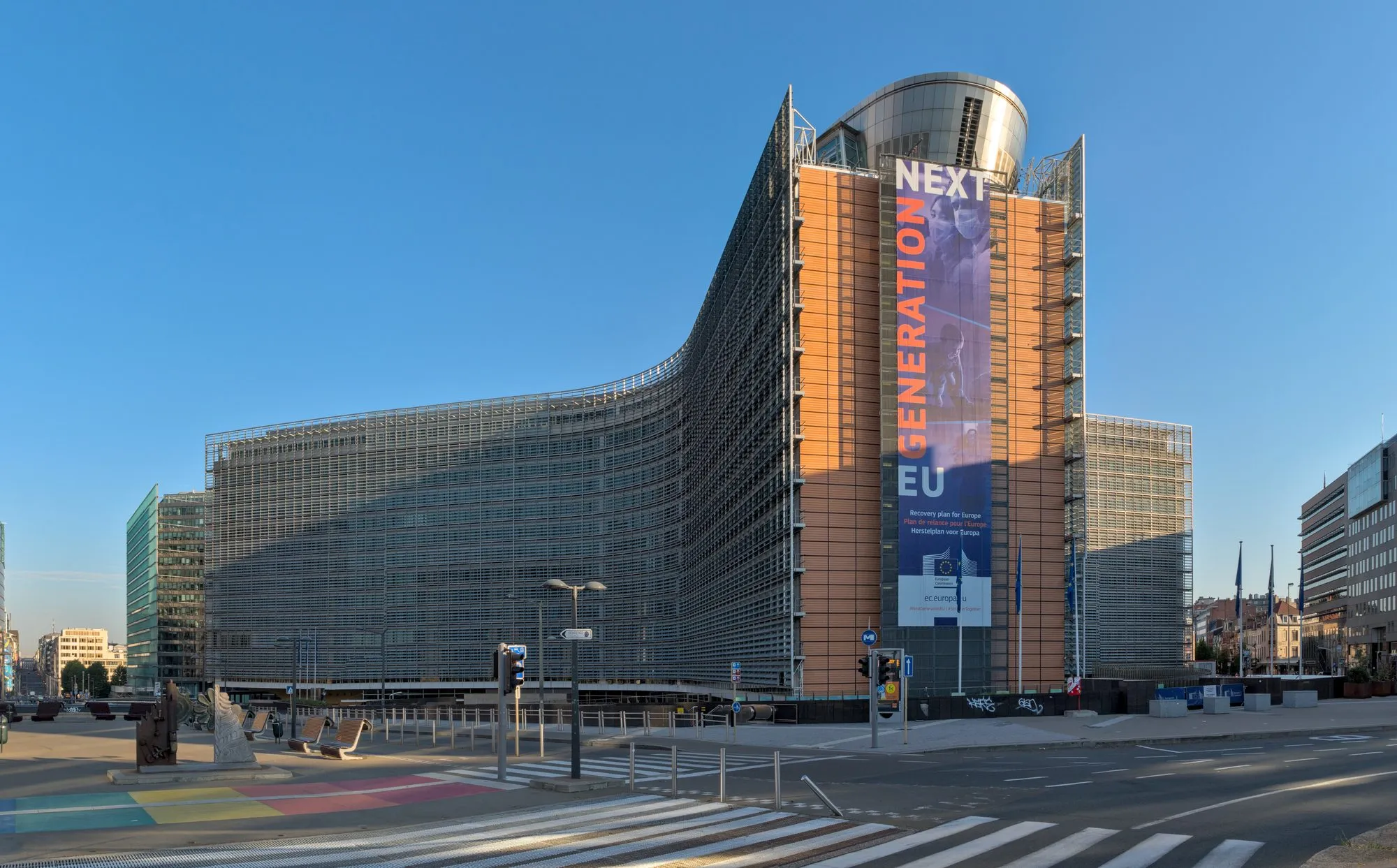
On 17 November 2026 the European Commission holds the Apply AI Summit at The EGG, Rue Bara 175, in Brussels, with an online strand alongside. The day runs from 08:30 to 19:30 Brussels time. Registration for on-site places closed on 9 October, so for most city officers the realistic way in is the virtual platform.
That is less of a loss than it sounds. The summit is the closing event of a policy that is already being turned into tools for public administrations, and the parts of it that land on a municipal desk are documented on Commission pages anyone can read today.
What the summit is
The Commission describes the summit as marking one year since it adopted the Apply AI Strategy, and as the close of the first European AI Innovation Month, which it runs with Ireland’s Council Presidency from 14 October to 17 November 2026. The other two flagship events of that month, the International AI Summit in Dublin and the AI in Science Summit, took place on 14 and 15 October.
The programme listed on the official page has four kinds of session: “gateway” sessions on the strategy itself, thematic trails on cross-sector and sector-specific questions, sessions on uptake with hands-on exhibitions, and panels. The first Apply AI Startup Award will be decided there, with pitches from ten finalists. Henna Virkkunen, the Commission’s Executive Vice-President for Technological Sovereignty, Security and Democracy, is named as special host. The organisers expect around 900 people on site and up to 2,500 online.
Healthcare, mobility and the public sector are the three sectors the page singles out. Cities are not mentioned by name, which is worth keeping in mind: municipalities sit inside the “public sector” heading rather than having a track of their own.
The strategy behind it
The Apply AI Strategy was published on 8 October 2025 as a Commission communication (full text on EUR-Lex), alongside a separate strategy on AI in science. It names eleven sectors, ten industrial ones plus the public sector, and promotes what the Commission calls an “AI first” policy, a preference for European solutions and, for public bodies specifically, open-source AI.
According to the Commission’s own Q&A, it mobilises around EUR 1 billion under the current 2021–2027 EU budget, drawn from Horizon Europe, the Digital Europe Programme and smaller programmes, and expects member states and private investors to add to it. Governance runs through two bodies: the Apply AI Alliance, an open coordination forum on the Commission’s Futurium site where members can post, join sector discussions and list themselves in a stakeholders’ catalogue, and an AI Observatory that is meant to track adoption and its effect on jobs.
For smaller administrations, one detail in the Q&A is easy to miss. The European Digital Innovation Hubs, now refocused as “Experience Centres for AI”, are meant to act as a single entry point to the EU’s AI support ecosystem not only for SMEs but also for public sector organisations. A city without an in-house data team can start there.
What it means for public services
The most concrete public-sector piece is the Public Sector AI Toolbox. In December 2025 the Commission set out three actions: the toolbox itself, described as a shared EU repository of open-source, reusable AI solutions and guidance; a step-by-step guide called the PAIR pathway (Public Sector AI and Interoperability Readiness); and an update of the European Interoperability Framework to add “AI first” principles. The barriers it listed will sound familiar to anyone in a town hall: fragmented data, limited access to trustworthy tools, low AI literacy and uncertainty about responsible use.
A June 2026 update says the toolbox will sit on the Interoperable Europe Portal and gather reusable tools, use cases from across Europe, training, and guidance on procurement and governance. It is described as a live resource, with a major review planned for the end of 2026 based on feedback from member states and administrations. Municipalities are named among the public bodies whose different conditions it needs to cover.
Then there is the law. According to the Commission’s AI Act page (updated 19 October 2026), the prohibitions and AI literacy obligations have applied since 2 February 2025, and the act became generally applicable on 2 August 2026, with exceptions. After the AI Omnibus amendment, the high-risk obligations for Annex III uses apply from 2 December 2027. Several of those uses are squarely public: access to essential public services, education, employment, migration and the administration of justice. Deployers of high-risk systems carry duties of human oversight and monitoring. For a city procuring an eligibility-screening or case-triage tool, that 2027 date is the planning horizon.
How to follow it, and what to look for
- Get on the virtual platform. The official page says some on-site sessions will be livestreamed on the virtual conference platform. Check the summit page for access details in the days before 17 November.
- Pick the public-sector sessions. Look for anything on the toolbox, the PAIR pathway or procurement of open-source and European AI. Those are the items that translate into reusable work rather than announcements.
- Listen for timelines. The toolbox review is due by the end of 2026, and the high-risk obligations land in December 2027. Any change to either matters more than any keynote.
- Join the Alliance. Membership is requested through Futurium, and it is where the Commission says sectoral workflows and consultations will run.
The week before, on 10 and 11 November, the Commission holds the seventh European Research and Innovation Days in Brussels and online, opened by Commissioner Ekaterina Zaharieva and focused on competitiveness, resilience and technological sovereignty. Its 2026 programme had not been published when we checked.
For other AI and technology dates, see our AI and technology calendar, and for the host city, our profile of Brussels.