
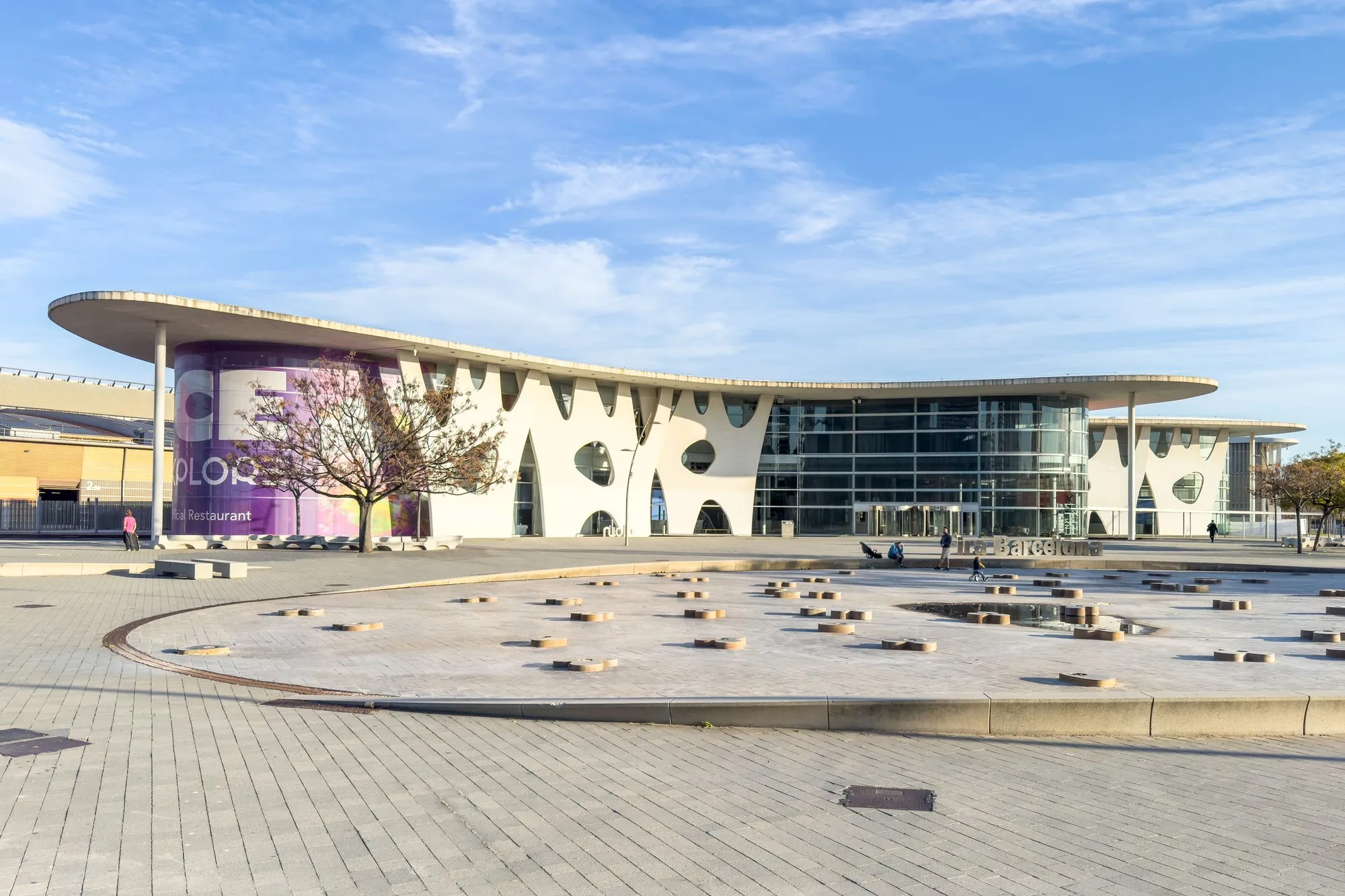
Smart City Expo World Congress returns to Barcelona from 3 to 5 November 2026, with Tomorrow.Mobility World Congress running alongside it on the same dates. Both take place at Fira de Barcelona’s Gran Via venue, in Halls 2 and 3, at Av. Joan Carles I, 64 in L’Hospitalet de Llobregat, just outside Barcelona proper. The organiser, Fira de Barcelona, has held the event in the city since 2011.
This is a preview built only from what the organisers have published. Where their own pages disagree, we say so rather than pick a number.
What the 2026 edition is about
Fira de Barcelona announced the edition in May under the theme “Urban Solutions, Real Impact”. The congress page frames the programme as moving “from inspiration to implementation”, and the stated emphasis across the materials is on projects that have already been delivered rather than concepts.
The official site now lists eight congress tracks: Enabling Technologies, Energy & Environment, Mobility, Housing, Governance, Living & Inclusion, Infrastructure & Building, and Blue Economy. The May press release listed seven and named housing as a special focus; housing now appears as a track in its own right. According to the organiser, the housing sessions cover urban planning and land policy, housing regulation, social and affordable housing, and renovation, retrofit and reuse of buildings.
Two newer formats sit inside the event. Terra50 is a new exhibition space presenting what the organiser describes as the 50 top-performing urban sustainability solutions to date, centred on green energy production, waste collection and urban greening. HOWS Barcelona, promoted by Barcelona City Council and organised by Fira de Barcelona, is a new congress on urban and affordable housing held alongside the expo on the same three days.
In May the organiser said it expected 1,000 cities, more than 25,000 attendees, more than 1,000 exhibitors and 600 speakers. These are the organiser’s own expectations; the event’s web pages give different figures in different places, so treat them as approximate.
Tomorrow.Mobility and the side events
Tomorrow.Mobility World Congress is created by Fira de Barcelona together with EIT Urban Mobility, an initiative of the European Institute of Innovation and Technology. EIT Urban Mobility lists its 2026 theme as “Mobility solutions, real impact” and names ten areas it will cover, including air quality data, Vision Zero cities, electrification of ports and cities, seamless multimodality, next-generation public transport, inclusive mobility planning, governing mobility data and zero-emission logistics.
For cities in our part of Europe, the most specific item on the calendar is the CEE Cities Roundtable on 3 November, 10:00 to 14:00, at Fira Barcelona as part of Tomorrow.Mobility. EIT Urban Mobility organises it with the New Mobility Association for municipal staff and mobility professionals from Central and Eastern Europe and the Baltic states. The listed subjects are urban zone policies, zero-emission public transport, walking and micromobility, integrating public transport across cities and regions, and building public support for change. The page does not describe an open registration; it asks those interested to contact the organisers by email.
Other events co-located with the expo, according to the organiser, are Tomorrow.Blue Economy, the Barcelona Deep Tech Summit and the Barcelona Cybersecurity Congress.
World Smart City Awards 2026
The 2026 finalists are published, and the winners will be announced at the World Smart City Awards ceremony on 4 November. Several European entries are on the list: Glasgow and Reykjavik are among the four City Award finalists; Munich’s digital twin, a water project in Pilsen, Smart Region Flemish Brabant, Madrid, an accessibility project in Monza, a housing project in Aigaleo and an ICLEI Europe fund are finalists in other categories. A Romanian company, URBIOLED, is a finalist in Energy & Environment with a project called “Smart Light for the Ones Left Behind”.
Attending, or following from home
The official passes page, when we checked it on 20 October, listed a three-day Visitor pass at €200, a Full Congress pass at €1,250 and an Investor pass at €1,495, all with VAT included. The visitor pass covers the exhibition, the open stages and side events, and the awards ceremony; main-stage keynotes require the congress pass. The page lists a 25% discount for groups of six or more and a 50% student discount on request, and there is a separate application route for a Government Pass. Prices can change by rate period, so confirm them on the official page before booking.
Doors open 9:00 to 19:00 on Tuesday and Wednesday and 9:00 to 17:00 on Thursday. Metro Line 9 serves the Fira and Europa/Fira stations and runs directly to both airport terminals; FGC trains also stop at Europa/Fira.
If you are not travelling, the full agenda is published on the official site, and the organiser’s Tomorrow.City platform carries recordings of sessions from 2025. The site’s header mentions “Barcelona & Online”, but we found no published details on how 2026 sessions will be streamed.
Why it matters for the cities we profile
The expo’s main subjects, digital public services, energy and mobility, are the same threads that run through the city profiles on futurehubs. That does not mean what is shown in Barcelona transfers easily to a mid-sized European city; much of the exhibition floor is vendors selling to municipalities, and a stand is not evidence that something works. The more useful parts for a city team are the award finalists, which are delivered projects with named owners, and peer formats such as the CEE roundtable, where officials from comparable cities compare notes on low-emission zones, public transport and street space.
For the host city’s own story, see our profile of urban renewal and community change in Barcelona. Series details for both congresses are on our Smart City Expo World Congress and Tomorrow.Mobility World Congress pages, and the wider calendar is in our events listing.