
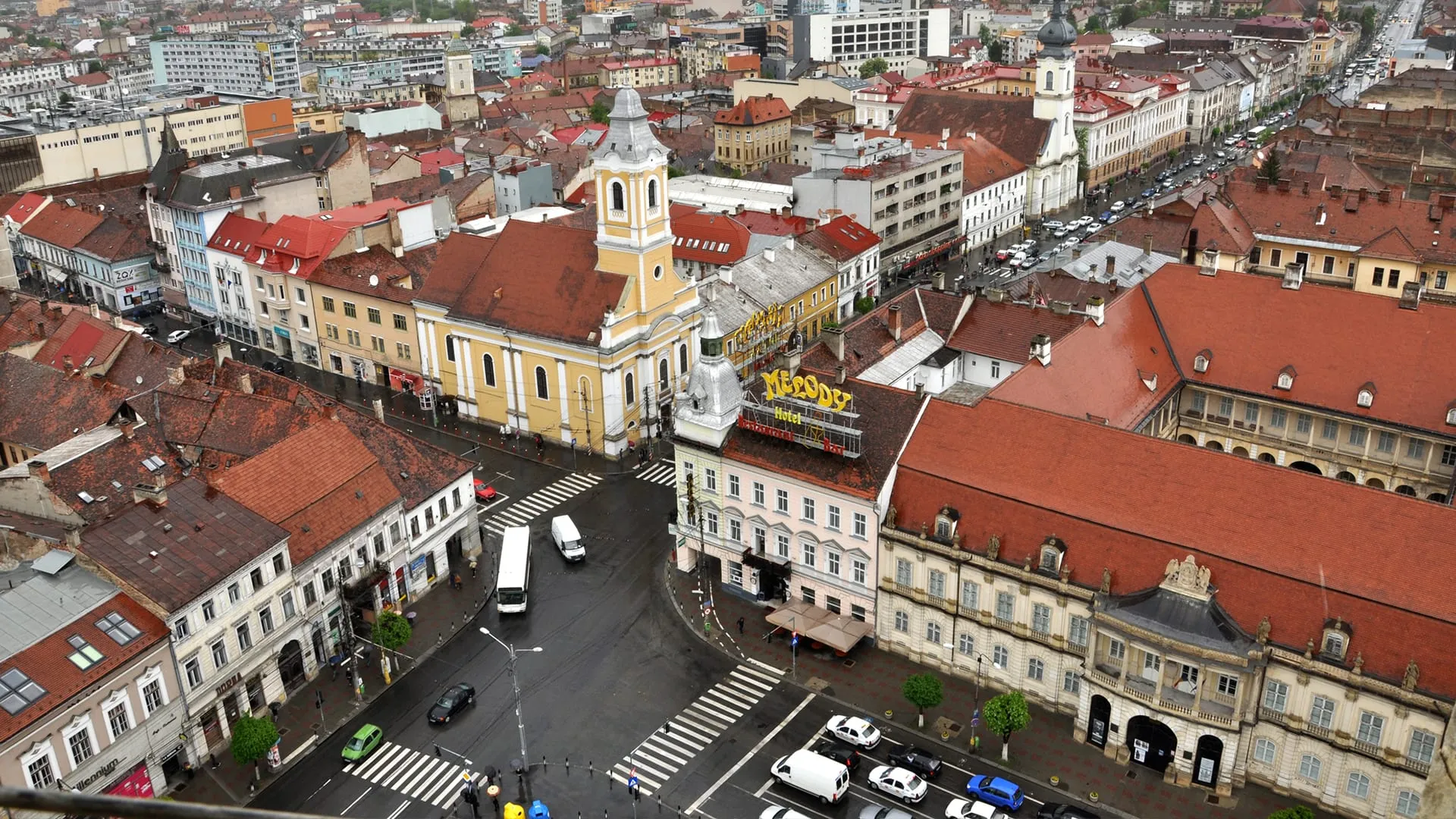
We publish this site from Cluj-Napoca, which makes writing about its transport slightly awkward. The honest starting point is not a list of initiatives. It is that when PwC ranked 25 cities across Central and Eastern Europe on smart urban mobility in 2024, Cluj-Napoca landed in the lowest band — the one the index calls an incipient stage — alongside Bucharest.
What the index measured
The PwC CEE Smart Cities Mobility Index scores cities on traffic management, environmental sustainability, public transport and active mobility — walking and cycling — and rates them on a scale running from incipient stage to best practice. The 25 cities come from Poland, the Czech Republic, Hungary, Bulgaria, Romania, Ukraine and their neighbours, so this is a comparison between peers, not against Copenhagen.
Where other cities did well is instructive:
- Wrocław and Lviv lead on segregated cycle paths — physically separated from traffic, which is the distinction that decides whether people who are not already cyclists will use them.
- Prague and Brno stand out on public transport, on the unglamorous combination of being cheap and being used.
- Tallinn is the only city in the set that meets WHO air quality standards. Cluj-Napoca is among those that do not.
Why the geography makes it harder
Marcel Lucian Popa's 2023 study of mobility in Cluj-Napoca, published by Pangeea, makes a point that explains part of the difficulty. The city's transport network is heterogeneous and asymmetric, and that follows from where it sits: a riverside city in a valley, with the Someș and the terrain dictating where roads can go and how many of them there can be.
Popa traces mobility flows over fifteen years across road infrastructure, interurban passenger transport and air traffic through Avram Iancu Airport, and the pattern that emerges is about the edges as much as the centre — commuting and peri-urban transit into a city that has grown faster than its road space.
What an early-stage score actually means
It does not mean nothing is happening. It means the things that move an index of this kind — separated cycle infrastructure at network scale, public transport that is cheap enough and frequent enough to be the default, air quality inside WHO limits — are not yet in place at the scale the leaders have them.
Those are also the expensive, slow, politically difficult items, as opposed to the ones that photograph well. A city can add an app, a smart traffic light and a painted lane and move almost nothing on this scale.
What would change it
On the index's own terms, three things: cycle routes separated from traffic rather than painted beside it; public transport measured on ridership and fares rather than fleet announcements; and air quality reported against the WHO limit rather than the national one. Each is measurable, and each would be visible in the next edition.
We will keep reporting on it, including when the answer is unflattering about the city we are based in.
Sources: PwC CEE Smart Cities Mobility Index, 2024 — 25 cities, with Bucharest and Cluj-Napoca placed in the lowest band, and the Wrocław, Lviv, Prague, Brno and Tallinn findings as reported by PwC Romania and Romania Insider; and Marcel Lucian Popa, “Assessing Urban Mobility Challenges in Cluj-Napoca: A Multifaceted Approach”, Pangeea, 2023. Rewritten and re-sourced in September 2026: the 2024 version of this page described the city's mobility strategy in terms that would have fitted any city, and closed with the words “According to Numbeo data:” followed by nothing.


